Pipe leak and shutoff details
Pipe leaks are not always dramatic. A slow drip under a sink, a wet water heater pan, a hose bib that will not close, or a ceiling stain after a cold night can all point to a problem that should be checked before it spreads.
If water is actively running and you can safely reach a fixture valve, appliance valve, water heater cold-water valve, or main shutoff, closing it may limit damage before a provider arrives.
Details that help explain your request
Useful details include where water is visible, whether it is still running, what you shut off, and any access problem like a crawlspace, locked utility room, condo gate, or stuck valve.
Common Olympia leak sources
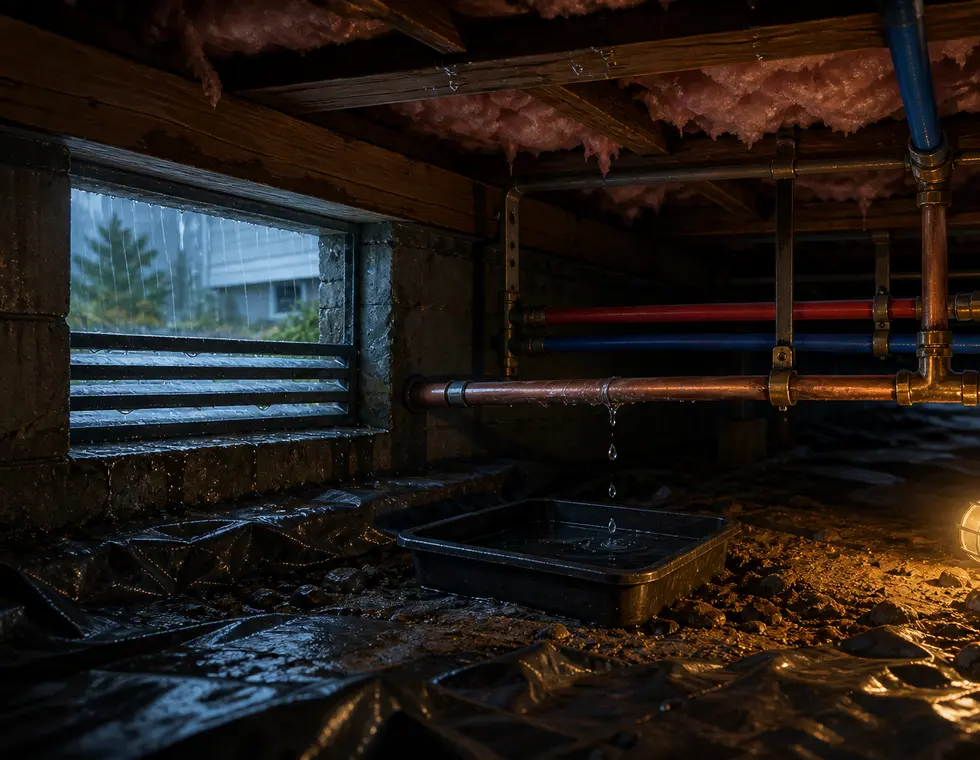
Older supply stops, hose bibs, crawlspace lines, water heater connections, dishwasher lines, toilet supplies, and exterior-wall piping can all fail during cold or wet stretches. If the leak is under your home, do not crawl into standing water near electrical lines.
Plumbing work and dry-out are separate
Plumbing work addresses the broken pipe, valve, fixture, or water heater connection. Dry-out, flooring, drywall, mold work, and insurance steps may involve separate cleanup or restoration work.